Service
Deep Tissue Massage
Holistic Healing and Customized Massage Therapy Services
What’s Covered on This Page
Deep Tissue Massage Targets Specific Muscle Problems, Not General Relaxation
Deep Tissue and Swedish Massage Solve Different Problems

What a Deep Tissue Session Feels Like and Afterward
Some Conditions Call for a Doctor’s Note Before Deep Tissue Work

Sessions Are Available at a West Sedona Studio or Wherever You’re Staying

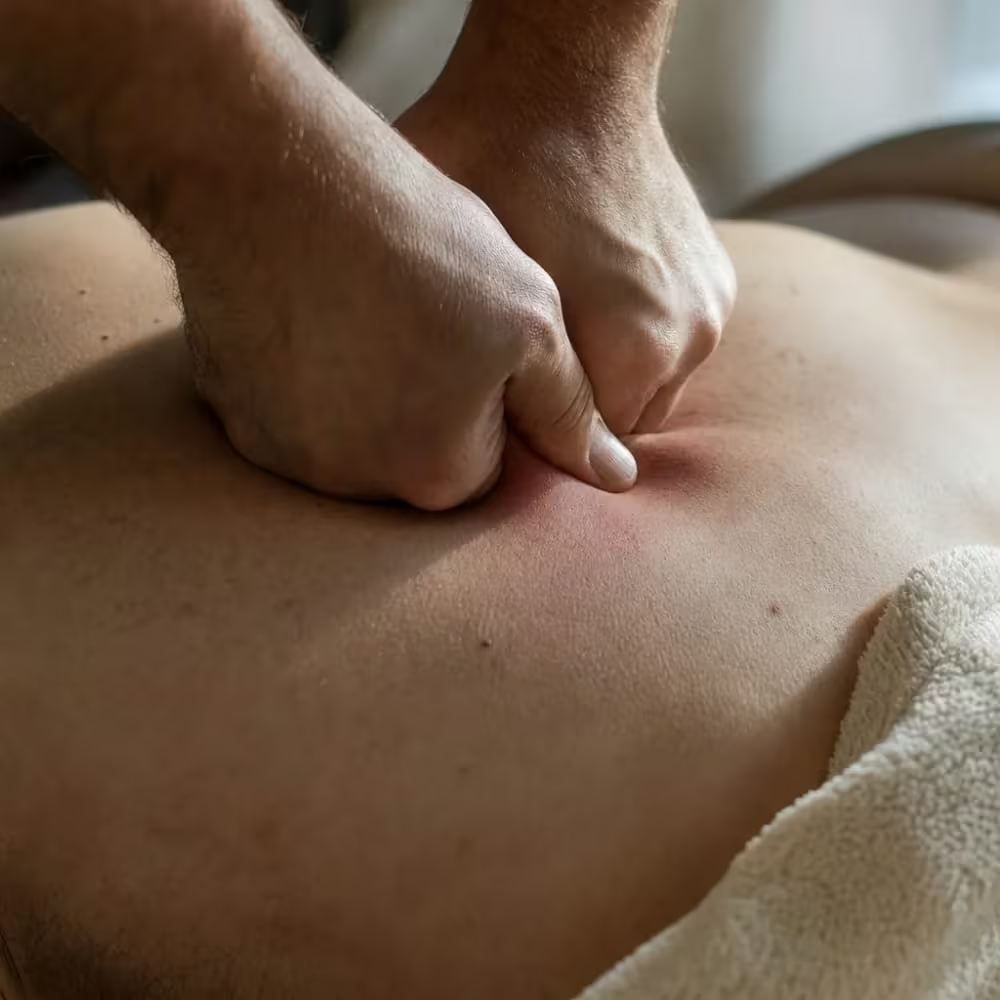
Deep Tissue Massage Targets Specific Muscle Problems, Not General Relaxation
A lot of people book deep tissue because they think it’s just a stronger version of a regular massage. It’s really a different tool with a different job. A relaxing massage uses long, flowing strokes to calm your whole body. Deep tissue slows way down and works with purpose on the places that hurt, reaching past the surface muscles to the tight layers underneath.
Think of the spot under your shoulder blade that you keep pressing into a door frame, or the tight band along your hip that shows up every time you sit too long. That’s the kind of thing deep tissue is made for. Your body has been holding on there, sometimes for months, and it needs patient, steady attention to soften.
You might be a good fit for deep tissue if any of this sounds like you:
- You have a knot or sore spot that keeps coming back in the same place.
- Your neck, shoulders, or low back feel stiff most days, not just once in a while.
- You do the same motions over and over, like typing, lifting, or driving long hours.
- Your muscles feel tight and guarded after hard activity or a long hike.
- A lighter massage feels nice, but the ache is right back the next morning.
Here’s something people don’t always hear: deeper doesn’t have to mean painful. Good deep tissue work goes slowly enough that your muscles can let the pressure in instead of fighting it. You may feel some intensity on a tender spot, but it shouldn’t make you hold your breath or tense up. If it does, the pressure can come down. Your body will open up more when it feels safe.
It’s also fine if deep tissue isn’t what you need right now. If you’re worn out, stressed, or just want to melt into the table, a gentler Swedish massage may do more for you than hard pressure ever could. Kris offers both, and many sessions blend the two, with deeper work where you’re tight and softer, soothing strokes everywhere else.
That’s where more than 25 years of hands-on experience really matters. Kris builds each session around you and what your body is telling her that day, not around a set routine. Because she also brings energy work into her sessions, the focus isn’t only on the knot itself. It’s on helping your whole self feel ready to let go of what it’s been carrying.
Deep Tissue and Swedish Massage Solve Different Problems
The easiest way to choose is to ask yourself one question. Is the problem in one place, or is it everywhere? If one spot keeps grabbing your attention, deep tissue is built for that. If your whole body feels heavy, wired, or tired, Swedish massage is often the better answer, even if you think you want firm pressure.
Swedish massage works on how you feel as a whole. The long, even strokes help your breathing slow down and your mind get quiet. People often walk out feeling lighter and sleep better that night. Deep tissue works on how a certain muscle behaves. The goal is a shoulder that turns more freely or a low back that doesn’t pull when you bend. You may feel a little tender for a day or so afterward, a bit like after a good workout, while that area settles.
Here’s a simple way to sort it out:
- Choose Swedish if stress is the main thing you’re carrying, you’re new to massage, or you want to feel calm and rested.
- Choose deep tissue if you can point to where it hurts, the same spot tightens up again and again, or gentle work hasn’t lasted.
- Ask for a blend if you have one or two problem areas but also want the rest of you to relax.
- Lean gentler if you have a big day tomorrow and don’t want any leftover tenderness.
Timing matters too. Say you’re in Sedona for a few days and spent the morning climbing a steep red rock trail. That evening your calves and hips feel tight, but you also feel happy and worn out. A soothing Swedish session can help you rest and recover. If one knee or hip is still talking to you a day or two later, that’s the time to add focused deep work there.
Your own body’s response is a good guide as well. Some people love firm pressure and feel better right away. Others tense up the moment the pressure increases, and for them, slower and softer work gets further. Neither one is wrong. What matters is what your muscles will accept on the day you come in.
You don’t have to get this right before you book. Healing Hands Massage by Kris in Sedona offers both Swedish and deep tissue work, and Kris shapes each session around what you share and what she feels in your body. Because she also weaves energy work into her sessions, the choice isn’t only about pressure. It’s about what kind of release you need, whether that’s a stubborn knot or a mind that won’t slow down.
If getting to a studio sounds like one more thing to manage, sessions are also offered in your home or wherever you’re staying. That can make the calm from a Swedish massage last longer, because you don’t have to get in the car afterward.
What a Deep Tissue Session Feels Like and Afterward
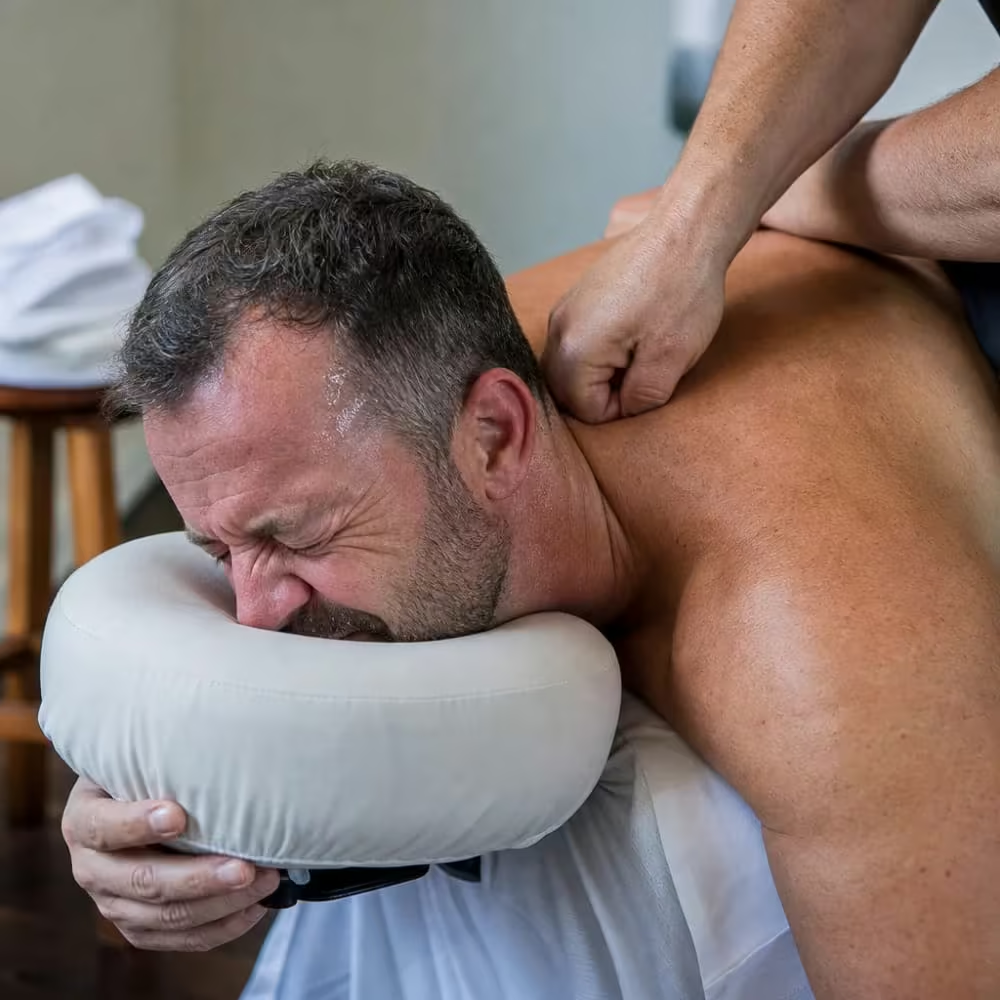
Deep tissue feels slower than most people expect. The pressure sinks in gradually and stays on one area long enough for the muscle to respond. You’ll probably feel warmth first, then a deep, focused pressure on the tight spots. On a stubborn knot, it can feel intense in a way that’s hard to describe. A lot of people call it a “good hurt,” the kind that feels like it’s reaching the exact place that’s been bothering you.
There’s a real difference between that kind of intensity and pain that works against you. Here’s how to tell them apart while you’re on the table:
- Helpful pressure feels deep and dull, and you can breathe slowly through it.
- It often eases a little the longer it stays, as the muscle starts to soften.
- Pressure that’s too much makes you clench your jaw, hold your breath, or pull away.
- Sharp, shooting, or tingling feelings aren’t something to push through. They’re a sign to say something right away.
You never have to be brave on the massage table. If the pressure is too much, say so. If you want more, say that too. Your muscles can only let go when they don’t feel under attack, so speaking up isn’t being difficult. It helps the work go deeper.
Sometimes more than muscle lets go. It’s pretty common for people to feel a wave of emotion, a long sigh, or a sudden heaviness as a tight area finally releases. Our bodies tend to hold stress in the same places they hold tension. Kris weaves energy work into her sessions, so this kind of release isn’t treated as a distraction. It’s welcome, and you can simply let it happen.
When the session ends, you may feel loose, a little dreamy, or more tired than when you walked in. Get up slowly. Your body has just done real work, even though you were lying still. Some people feel light and energized right away. Others want a quiet evening and an early night.
Over the next day or two, the areas that got the most attention may feel tender, like the post-workout feeling mentioned earlier. What you’re watching for is what comes next. Maybe your shoulder turns without that familiar catch, or you bend to tie your shoes and your low back doesn’t pull. That’s usually when people realize how long they’d been bracing against that spot without knowing it.
If the relief fades after a while, that doesn’t mean the session didn’t work. A knot that took months to build often needs more than one visit to fully soften. How long the change lasts is useful information. It helps show whether your body would do well with regular deep work, a gentler mix, or just an occasional tune-up.
Have questions?
We’re happy to help.
Book A Massage. Healing Hands Massage by Kris in Sedona is ready to help.
Some Conditions Call for a Doctor’s Note Before Deep Tissue Work
Deep tissue work is strong medicine for tight muscles, and that’s why it isn’t right for every body at every moment. Firm, slow pressure reaches deep into tissue, blood vessels, and joints. When something in your health changes how those parts respond, it’s wise to pause and talk with your doctor first. That isn’t about being overly careful. It’s about making sure the work helps you.
Here are the situations where it’s smart to get your doctor’s okay before booking deep tissue:
- You’ve had surgery recently, or you’re still healing from one.
- You’ve ever had a blood clot, or your doctor is watching you for one.
- You take blood thinners, or you bruise very easily.
- You have osteoporosis or another condition that makes your bones fragile.
- Your blood pressure is high and not yet under control, or you have a heart condition.
- You’re going through cancer treatment, or you’ve just finished it.
- You have diabetes with numbness in your hands or feet, so it’s hard to tell how much pressure you’re feeling.
- You’re pregnant, especially if you haven’t talked with your provider about massage yet.
None of these means massage is off the table for good. Often it just means a gentler approach, a change in which areas get attention, or waiting a little longer. Your doctor knows your history and can tell you what’s safe for you right now.
A fresh injury is a different case. Say you rolled your ankle on a rocky Sedona trail yesterday and it’s swollen, warm, and bruised. Deep pressure on that spot won’t speed up healing. It can make things worse. New injuries need time to calm down first. The same goes for any area that’s red, hot, or puffy, or that hurts even when nothing is touching it. If you’re not sure whether an injury is serious, have a doctor look at it before you think about massage.
Some signs mean you shouldn’t book any massage today. A fever, the flu, a spreading rash, or a skin infection all belong on the rest-and-recover list. Your body is already working hard, and deep pressure asks it to work harder.
Even if none of this applies to you, tell your therapist about any health changes, new medicines, or old injuries before your session. Things that seem small, like a shoulder you hurt years ago or a new prescription, can change how deep the work should go and where it should stay light. The more your therapist knows, the better the session can be shaped around what your body needs.
Waiting can be hard when you’re sore and ready for relief. But getting the go-ahead first means that when you do get on the table, you can relax fully, knowing the work is helping you heal.
Ready to Get Started?
Book A Massage. Call 9288212877 today.
Sessions Are Available at a West Sedona Studio or Wherever You’re Staying
You can come to Kris at her West Sedona studio, or she can come to you, at your home or wherever you’re staying in town. Both are real choices, and both can give you good deep tissue work. The better one depends on your day, your body, and what helps you relax.
The studio is a good fit when you want a space that’s set aside just for this work. Some people find it easier to let go when they’ve stepped away from their own home. There are no dishes in the sink or phones ringing in the next room, and no one needs you for the next hour. If your house is busy with kids, pets, or guests, a quiet room somewhere else can be a gift in itself.
A session where you’re staying makes sense when getting there is the hard part. Maybe you’ve spent the day on the trails and your legs are done. Maybe you’re recovering from a long drive into town, or you simply don’t want to plan around traffic. During busy months, the main roads through Sedona can back up with visitors, and sitting in a car is the last thing tight hips and a sore low back need before deep work. As mentioned earlier, staying put afterward also lets you rest right away instead of getting behind the wheel.
Here are a few questions that can help you choose:
- Do you relax more in a calm, separate space, or in your own familiar surroundings?
- Is your body so worn out from hiking or travel that the trip itself feels like a chore?
- Will the place you’re staying be quiet for the length of your session?
- Do you want to go straight to bed or a warm shower afterward without leaving?
- Are you sharing a rental or room with someone who’d also like a session?
If you choose an in-home or lodging session, a little planning helps you get the most from it. Think about which room will be the quietest, and let anyone you’re staying with know you’ll need some uninterrupted time. When you call, ask Kris what kind of space works best and anything you should have ready. That way, nothing takes your attention away once the work begins.
Kris also knows Sedona’s resort setting from the inside. She worked as a therapist at L’Auberge and Amara Resort here in town before building her own practice. That background can be reassuring if you’re a visitor who wants a resort-quality session but would rather stay in your own cottage, rental, or hotel room.
Wherever the session happens, it’s still shaped around you. The location changes the setting, not the care. Your deep tissue work, and any energy work you’d like woven in, is built around what your body needs that day.